
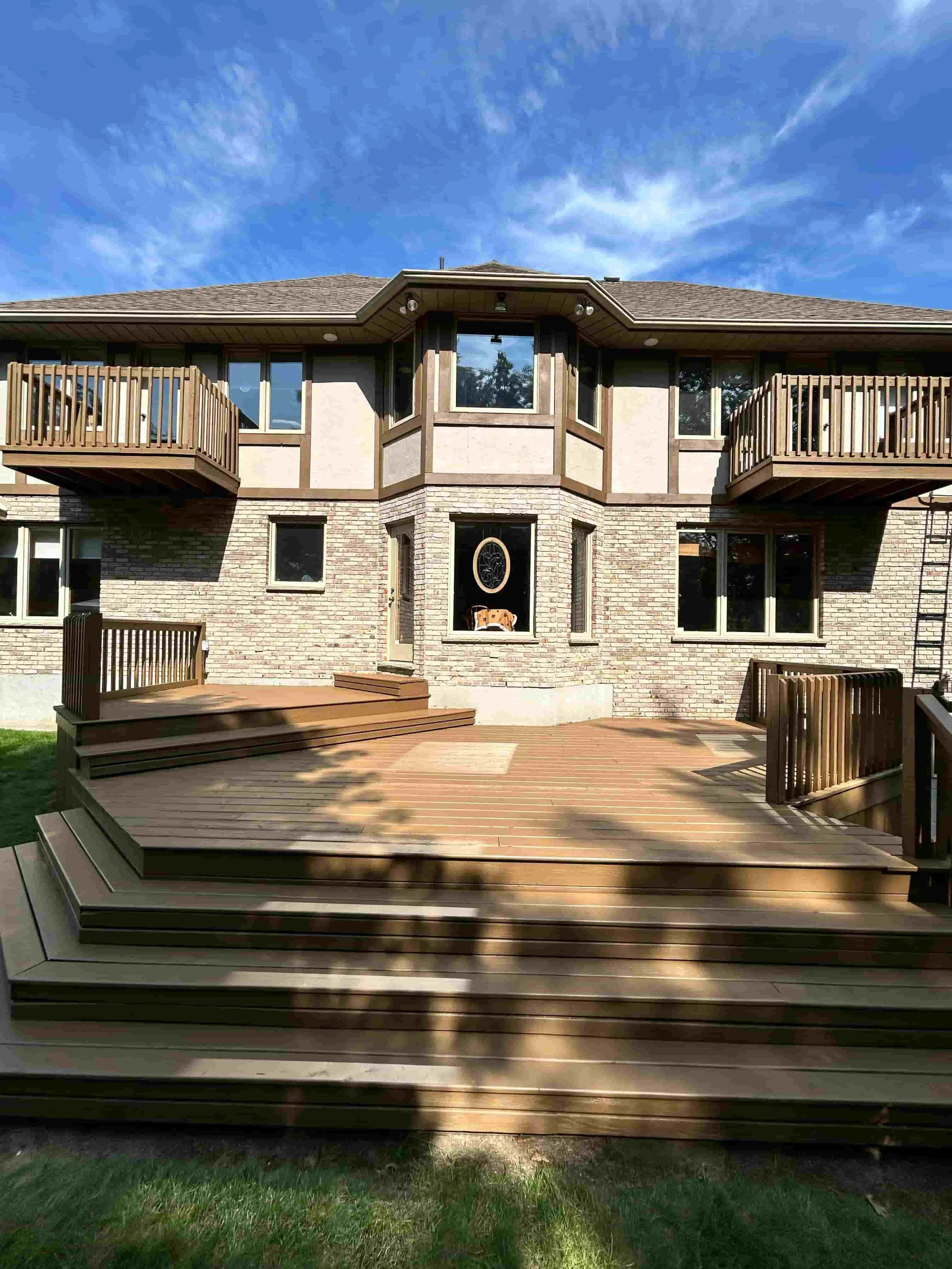
When to Stain a Deck in Ontario: Timing, Weather & What to Watch For
When is the best time to stain a deck in Ontario? Spring and fall timing, weather conditions, prep steps, and common mistakes that ruin a finish.
Why Timing Matters More Than You Think
Deck stain isn't paint. It doesn't sit on top of the wood, it soaks in. And for that to happen, conditions have to be right. The wood needs to be dry, the air can't be too humid, and the temperature has to be warm enough for the stain to penetrate without drying on the surface before it absorbs.
Get the timing wrong and you'll see it within a few months. Peeling. Bubbling. A milky, blotchy finish that looks worse than bare wood. Then you're stripping the whole thing and starting over, which costs more than doing it right the first time.
Ontario's climate makes this trickier than most places. We go from -20°C winters to 35°C summers with humidity that shifts by the hour. There's a real window for deck staining here, and it's narrower than people think.
The Best Months to Stain a Deck in Ontario
Late April through early June is the prime window. Snow is gone, the wood has had time to dry from winter moisture, and temperatures are sitting right where they need to be. This is when most professional deck staining happens in the London area, and for good reason.
Spring gives you moderate temperatures, lower humidity than summer, and enough dry days to get the job done without rushing. Your deck gets a fresh coat of protection right before the season you'll actually use it.
September through mid-October is the second window. Summer heat is fading, humidity drops, and you can give the deck a protective coat before winter. The risk here is running out of warm weather. If a cold snap shows up early, the stain may not cure the way it should.
Midsummer works but it's not ideal. Temperatures above 30°C cause stain to flash-dry on the surface instead of soaking into the wood. You end up with an uneven finish that wears off fast. If you have to stain in July or August, work in the early morning or late afternoon when the deck is in shade.
Winter is off the table. No exterior stain product cures properly below 10°C, and the wood is still holding moisture from snow and freeze-thaw cycles.
Temperature, Humidity and Weather Rules
Every stain product has its own specs, but the general rules for Ontario hold across most brands:
- Temperature: Between 10°C and 30°C. Below 10 and the stain won't penetrate. Above 30 and it flash-dries on the surface.
- Humidity: Under 70%. High humidity slows drying, causes uneven absorption, and can trap moisture under the finish.
- Rain: No rain for at least 24 to 48 hours after application. Check the full forecast, not just tomorrow morning.
- Sunlight: Don't stain in direct sun. The hot surface causes the product to dry before it absorbs. Work in shade or pick an overcast day.
- Wind: A light breeze is fine, it helps drying. Strong wind blows debris into wet stain and creates uneven drying.
- Overnight lows: Make sure nighttime temperatures stay above 5°C for at least 48 hours after staining. A frost on freshly stained wood will wreck the finish.
Pro tip: Don't just check today's weather. Look at the full 3-day forecast before you start. One surprise rain shower 12 hours after staining can wash the finish off or leave water marks that won't come out.
How to Tell If Your Deck Is Ready for Stain
The water test. Splash a handful of water on the deck boards. If it beads up and sits on the surface, the wood is still sealed from old stain or hasn't dried enough. Not ready. If the water soaks in within 30 seconds, the wood is open and ready to accept new stain.
Visual signs it's time:
- Wood has turned grey or silver, especially on flat surfaces that get direct sun
- The surface feels rough or splintery underfoot
- Colour has faded unevenly, with sunny spots looking washed out while shaded areas still have colour
- You can see cracking or splitting in the boards
- Mildew or green algae keeps showing up even after cleaning
Moisture levels. Professional stainers use a moisture meter to check the wood before starting. You want the reading below 15% for oil-based stains and below 18% for water-based products. If it rained in the last 48 hours, the wood is probably too wet regardless of how dry the surface looks.
New Decks vs. Existing Decks
New pressure-treated lumber needs time to dry before staining. Most manufacturers say 3 to 6 months after installation. The wood comes from the mill soaked with preservative chemicals and moisture, so if you stain too early, the product can't penetrate and it peels off within the first season.
How do you know when it's ready? Same water test. If water beads up on the boards, they're still too wet. Wait a few more weeks and try again.
Cedar decks are a bit different. Cedar has natural oils that resist stain when fresh. Let it weather for at least 2 to 3 months, then clean it with a wood brightener before staining. Skip the brightener and the stain just sits on top of those oils instead of bonding with the wood.
Existing decks with old stain need cleaning and sometimes stripping before you restain. If the old finish has just faded and worn thin, a good power wash and light sanding is usually enough. But if it's peeling, flaking, or built up thick, you need to strip it down first. New stain won't bond over a failing old finish. It just peels off with it.
What Happens When You Stain at the Wrong Time
Staining outside the right conditions isn't just a waste of product. It creates problems that cost more to fix than the original job would have.
Too cold: The stain sits on the surface and never fully cures. It stays tacky, picks up dirt, and peels within months. You end up stripping the whole thing and starting from scratch.
Too hot: The stain flash-dries before it soaks in. You get a blotchy, uneven finish with poor penetration. It wears through in one season, especially on the flat surfaces that take foot traffic.
Too humid or wet wood: Moisture gets trapped under the stain. You'll notice a milky, whitish look called moisture entrapment. It doesn't dry out on its own, it needs to be stripped. This is the most common deck staining failure in Ontario because people stain too soon after rain.
Rain after application: If rain hits within 24 hours of staining, it can wash the product right off the surface or leave visible water marks. Light rain after 12 or so hours usually isn't a disaster, but heavy rain in the first few hours often means doing it all over again.
How to Prep Your Deck Before Staining
Even with perfect timing, stain won't perform on a dirty or damaged surface. Here's the prep sequence that makes a finish last:
- Clear the deck. Move all furniture, planters, grills, everything. You need full access to every board.
- Power wash. Remove dirt, mildew, grey wood fibres, and any loose old stain. Use a fan tip and keep the pressure moderate. Too much pressure gouges the wood grain.
- Apply a wood brightener. After washing, a brightener (usually oxalic acid based) restores the wood's natural pH and opens the grain for better absorption. A lot of DIYers and cheaper contractors skip this step. It makes a real difference.
- Sand rough spots. Hit any raised grain, splinters, or rough patches with 80 to 100 grit sandpaper. You're smoothing the surface, not removing material.
- Replace damaged boards. Anything cracked through, rotted, or structurally soft should be swapped before staining. Stain doesn't fix structural issues.
- Let it dry. The deck needs at least 24 to 48 hours of dry weather after washing before stain goes on. Longer if it's been a wet spring. This is where patience pays off.
London-area timing note: Spring in Southwestern Ontario can be unpredictable. April showers are real. If you're planning a May staining, book the power wash for mid to late April so the deck has time to dry even if you lose a few days to rain.
Frequently Asked Questions
How often should I stain my deck in Ontario?
Every 2 to 3 years for most wood decks. If your deck gets heavy sun and foot traffic, closer to every 2 years. Covered or shaded decks can sometimes go 4 years between coats.
Can I stain my deck in October in Ontario?
Early October usually works as long as daytime temps are still above 10°C and overnight lows stay above 5°C. Keep an eye on the extended forecast. Once consistent cold weather moves in, you're waiting until spring.
What temperature is too cold to stain a deck?
Below 10°C for most products. Some oil-based stains can handle slightly cooler temps, but water-based stains need at least 10°C to cure properly. Always check the product label for the manufacturer's minimum.
Should I stain my deck in the morning or evening?
Morning is usually best. The deck is cool, you have a full day of drying ahead, and you can work before the sun hits the surface. Evening works too, but you need overnight temperatures warm enough for proper curing.
How long after rain can I stain my deck?
Wait at least 24 to 48 hours of dry weather. The surface might look dry after a few hours, but the wood underneath is still holding moisture. A moisture meter reading below 15% is the safest way to confirm it's ready.
Can I stain over old stain without stripping?
If the old stain has faded evenly and isn't peeling, usually yes. A thorough cleaning and light sanding should be enough. If it's peeling, flaking, or built up in layers, strip it first or the new coat won't bond.
How long before I can walk on a freshly stained deck?
Light foot traffic after 24 hours. Furniture can go back after 48 hours. Full cure takes about a week, so avoid dragging anything heavy across it during that time.
Is it worth hiring a professional to stain my deck?
If you want a finish that looks even and lasts more than one season, yes. Pros check moisture levels, use commercial-grade products, and know how to work around Ontario's unpredictable spring weather. The prep work alone is where most DIY attempts fall short.
Ready to Get Your Deck Stained This Spring?
Book early, spring fills up fast. Tell us about your deck and we'll get back to you within one business day with a clear estimate.